
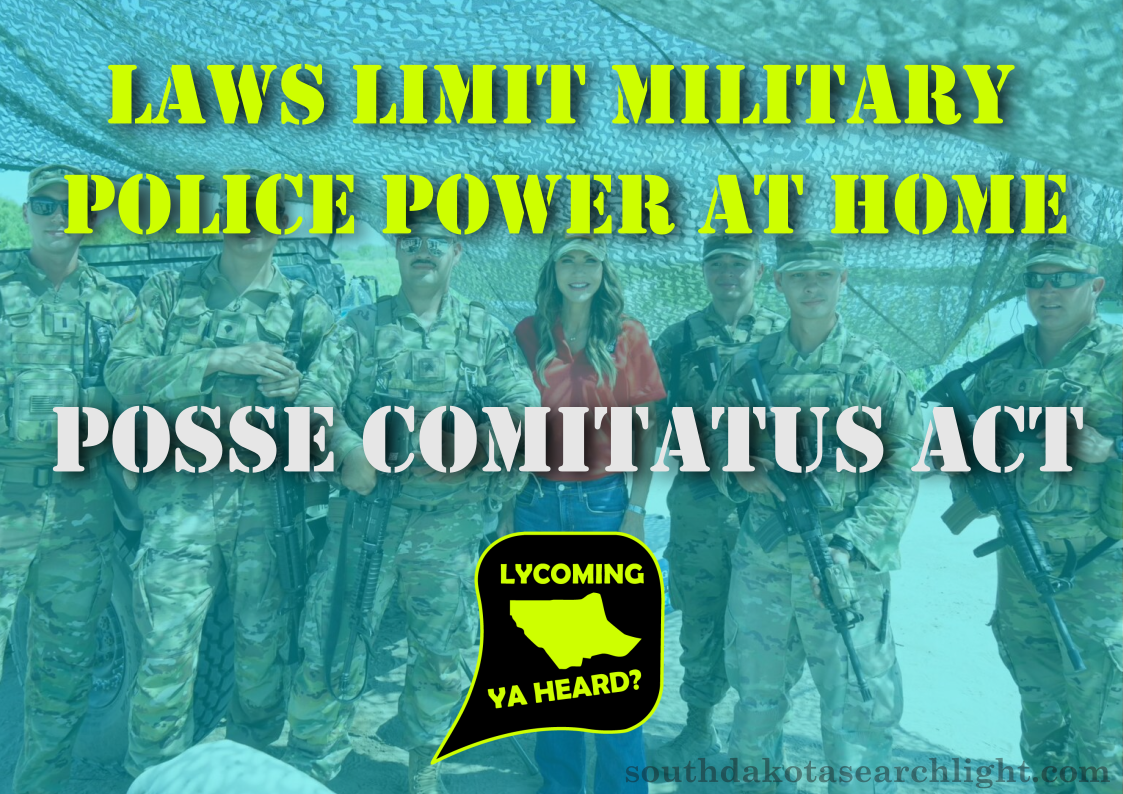
How U.S. Laws Limit Military Police Power at Home: Posse Comitatus Act Explained
When you see troops in action, whether in Washington, D.C., or along the southern border, it’s natural to wonder: Are they legally allowed to be there? The short answer involves two key laws: the Posse Comitatus Act and the special rules that apply to the National Guard, especially under Title 32.
The Posse Comitatus Act (18 U.S.C. § 1385).
This law generally limits the use of the U.S. military for domestic law enforcement. It was passed in 1878 to prevent the military from being used like police, except under specific legal exceptions. In simple terms, active-duty military can’t be deployed to police protests or crack down on crime inside the U.S. unless authorized by law.
The “Title 32 Loophole”, A Key Flexibility.
Here’s where Title 32 of the U.S. Code comes in. It allows the National Guard to be activated for state or homeland missions without federal intervention. This is called the “Title 32 status,” and it permits governors to send Guard troops to handle border security, natural disasters, or civil unrest, without violating the Posse Comitatus Act.
How does this affect the President and Governors?
- The President has the constitutional power as Commander-in-Chief to deploy troops in Washington, D.C., especially during emergencies or civil unrest. Using the Insurrection Act, he can send federal troops directly into D.C., bypassing the Posse Comitatus Act because it’s a federal authority designed for such situations.
- State governors, however, use Title 32 to send National Guard units to the U.S.-Mexico border to support law enforcement and secure the area. This complies with the law because these Guard members are operating under state authority, not as active-duty soldiers. Title 32, provides a flexible way to support border security without violating the Posse Comitatus Act.
Washington D.C. has no Governor.
- The unique status of Washington, D.C., being a federal district without a governor, explains why the President’s powers to deploy the military there are so special. Since D.C. is directly overseen by the federal government, the President, as Commander-in-Chief, has the constitutional authority to send troops into the city more easily than into a state. This special legal footing gives the President broad and direct authority to act quickly in D.C., emphasizing its role as the nation’s capital where federal power is concentrated.
The Bottom Line.
- Everyday citizens see troops deployed in their communities or along borders, it’s natural and often necessary to question your government. Many people are surprised to learn that while the Posse Comitatus Act generally restricts the military from law enforcement inside the U.S., there are specific laws and legal provisions, like the use of the National Guard under Title 32 and the President’s constitutional powers, that make such deployments lawful. So, while the presence of troops might seem concerning, these measures are rooted in legal protections designed to ensure that military support is used appropriately and within the bounds of the law.
Ya Heard
Legal Statute References:
- Posse Comitatus Act: 18 U.S.C. § 1385
- Insurrection Act: 10 U.S.C. §§ 251-255
- National Guard Authority: Title 32 of the U.S. Code